

Forest and Grassland Resources Research ›› 2025›› Issue (1): 104-113.doi: 10.13466/j.cnki.lczyyj.2025.01.012
• Technical Application • Previous Articles Next Articles
ZHANG Jiao1( ), CHEN Lingxiu1, DAI Hongxia1, LIU Shenglong1, CHEN Sitao1, XU Mengjie1, XIE Huili1, LIU Xingzhao1,2()
Received:2024-09-23
Revised:2025-01-06
Online:2025-02-28
Published:2025-08-06
CLC Number:
ZHANG Jiao, CHEN Lingxiu, DAI Hongxia, LIU Shenglong, CHEN Sitao, XU Mengjie, XIE Huili, LIU Xingzhao. Vegetation change and its drivers in the Minjiang River Basin in 2000—2020[J]. Forest and Grassland Resources Research, 2025, (1): 104-113.
Add to citation manager EndNote|Ris|BibTeX
URL: https://www.lyzygl.com.cn/EN/10.13466/j.cnki.lczyyj.2025.01.012
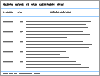
Tab.1
Grading of the impact of NDVI
| SNDVI,GC | 影响程度 | ||
|---|---|---|---|
| <-0.002 0 | 明显抑制 | ||
| -0.002 0 | ~ | <-0.001 0 | 中度抑制 |
| -0.001 0 | ~ | <-0.000 2 | 轻微抑制 |
| -0.000 2 | ~ | <0.000 2 | 基本无影响 |
| 0.000 2 | ~ | <0.001 0 | 轻微促进 |
| 0.001 0 | ~ | <0.002 0 | 中度促进 |
| ≥0.002 0 | 明显促进 | ||
Tab.2
Criteria for determining drivers and calculating the contribution rate
| SNDVI,GC | 驱动因素 | SNDVI,CC | SNDVI,HA | 贡献率/% | |
|---|---|---|---|---|---|
| 气候变化 | 人类活动 | ||||
| >0 | CC&HA | >0 | >0 | ||
| CC | >0 | <0 | 100 | 0 | |
| HA | <0 | >0 | 0 | 100 | |
| <0 | CC&HA | <0 | <0 | ||
| CC | <0 | >0 | 100 | 0 | |
| HA | >0 | <0 | 0 | 100 | |
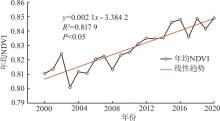
Fig.1
Inter-annual variation of NDVI in vegetation cover in the Minjiang River Basin,2000—2020
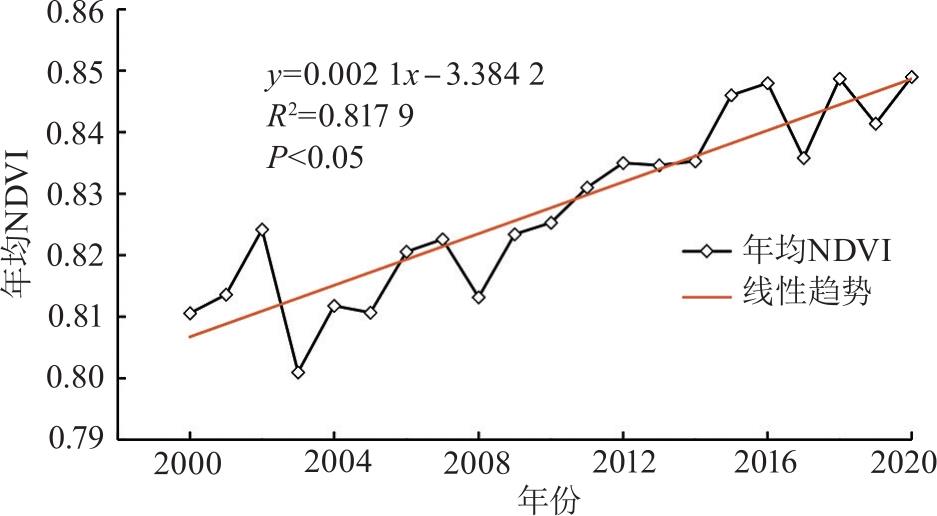
Fig.2
Spatial trend and significance test of NDVI change in Minjiang River Basin from 2000 to 2020
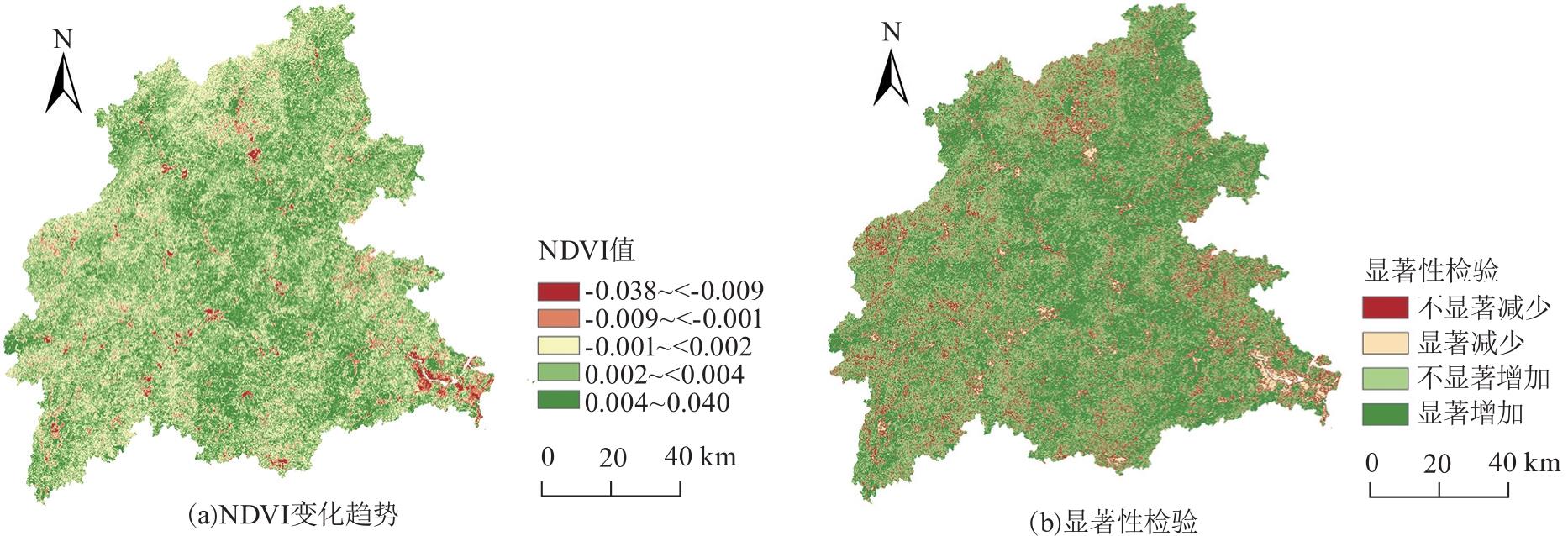
Fig.3
Temperature and precipitation dynamics in the Minjiang watershed in 2000—2020
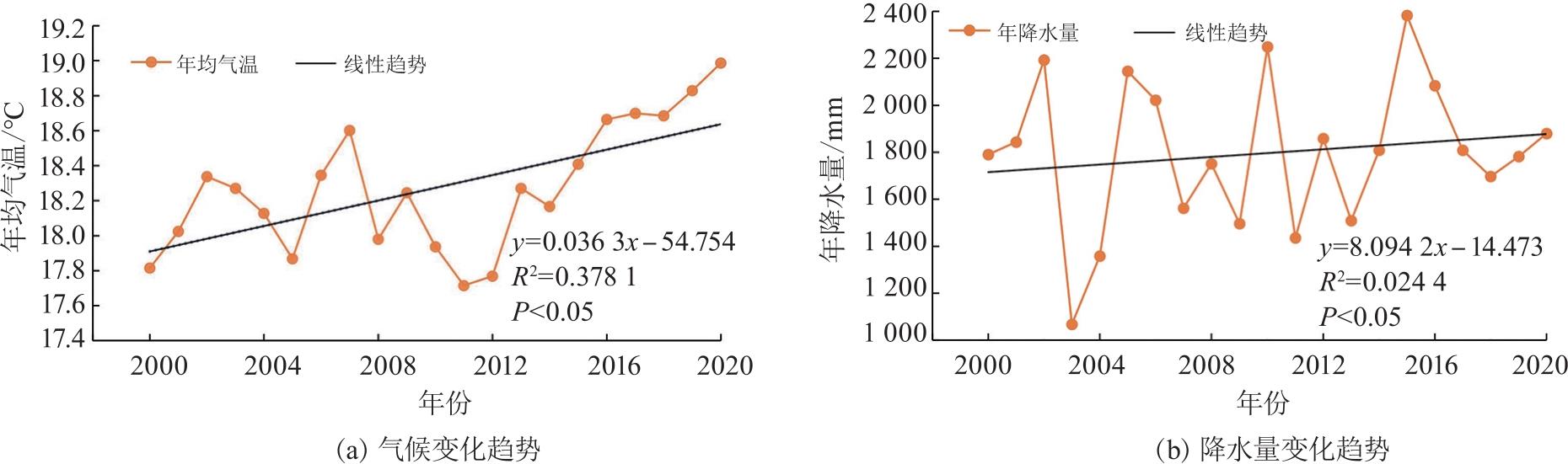
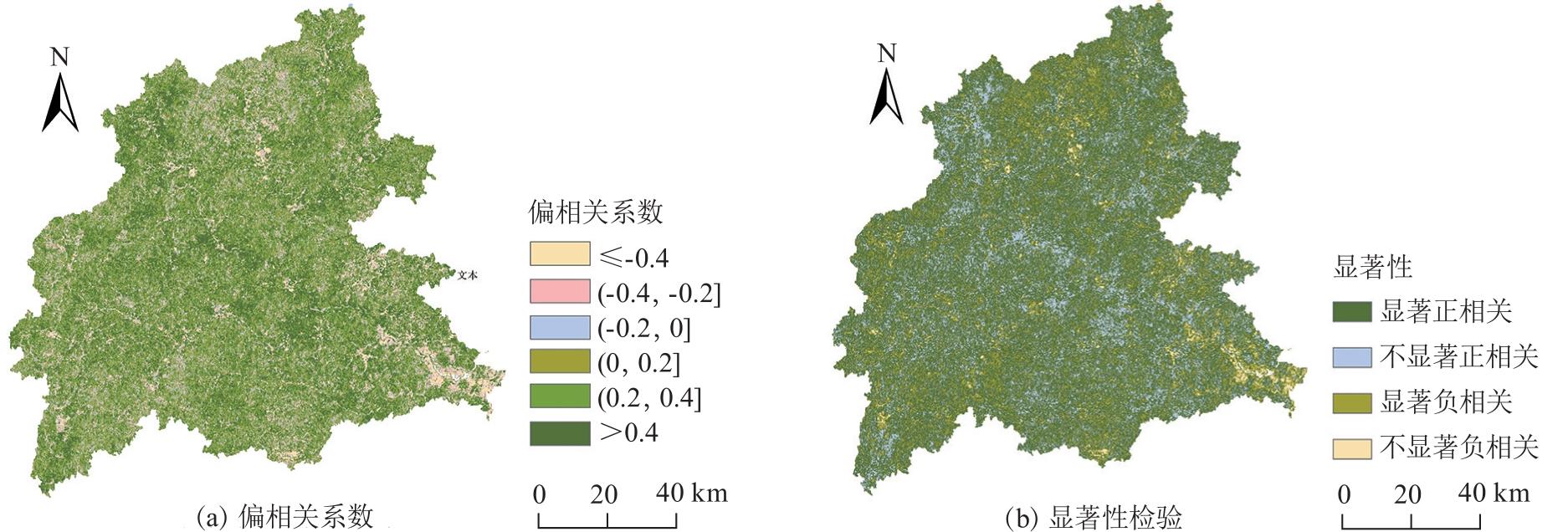
Fig.4
Spatial distribution of bias correlation coefficients and significance tests for temperature and NDVI in the Minjiang River Basin
Tab.3
Correlation of climatic factors with NDVI and area share in Minjiang River Basin
| 气候因子 | R | 面积占比/% | |||||
|---|---|---|---|---|---|---|---|
| 取值范围 | 平均值 | 显著正相关 | 不显著正相关 | 显著负相关 | 不显著负相关 | ||
| 气温 | -0.91~0.91 | 0.204 7 | 61.22 | 18.95 | 18.12 | 1.71 | |
| 降水 | -0.80~0.83 | 0.126 9 | 67.76 | 6.08 | 25.68 | 0.48 | |
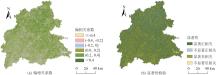
Fig.5
Spatial distribution of partial correlation coefficients and significance tests of precipitation and NDVI in the Minjiang River Basin
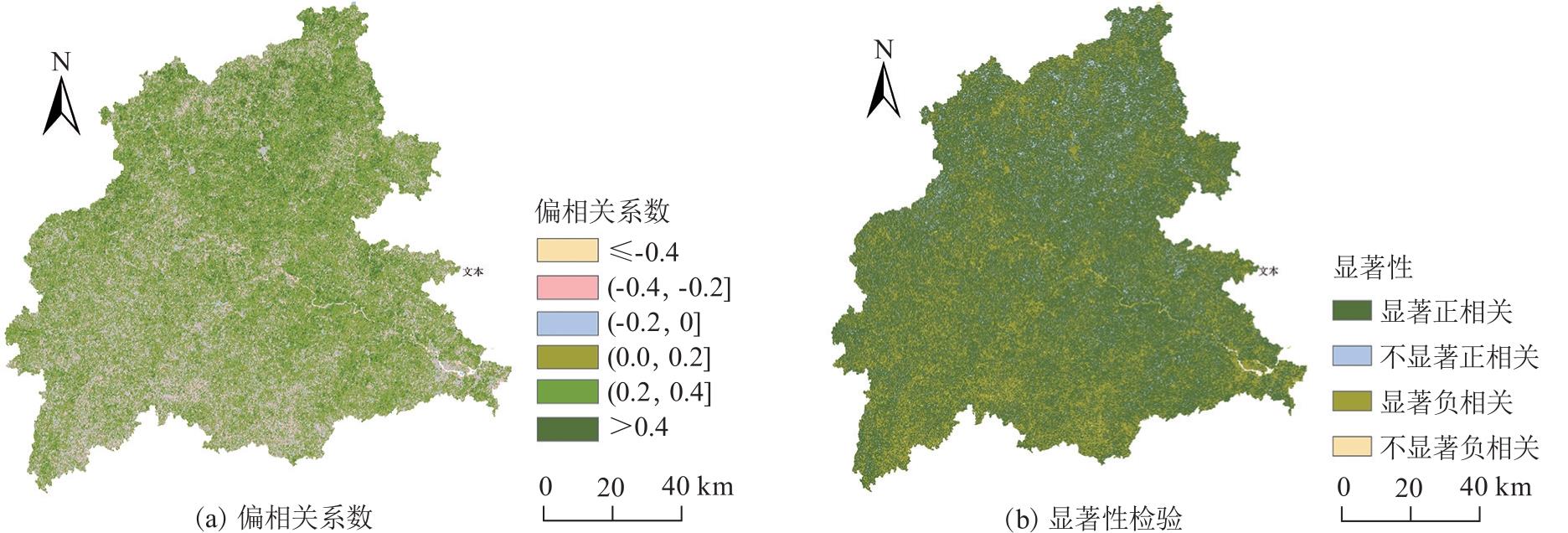
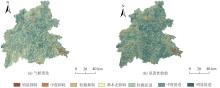
Fig.6
Spatial distribution of the degree of influence of factors on NDVI
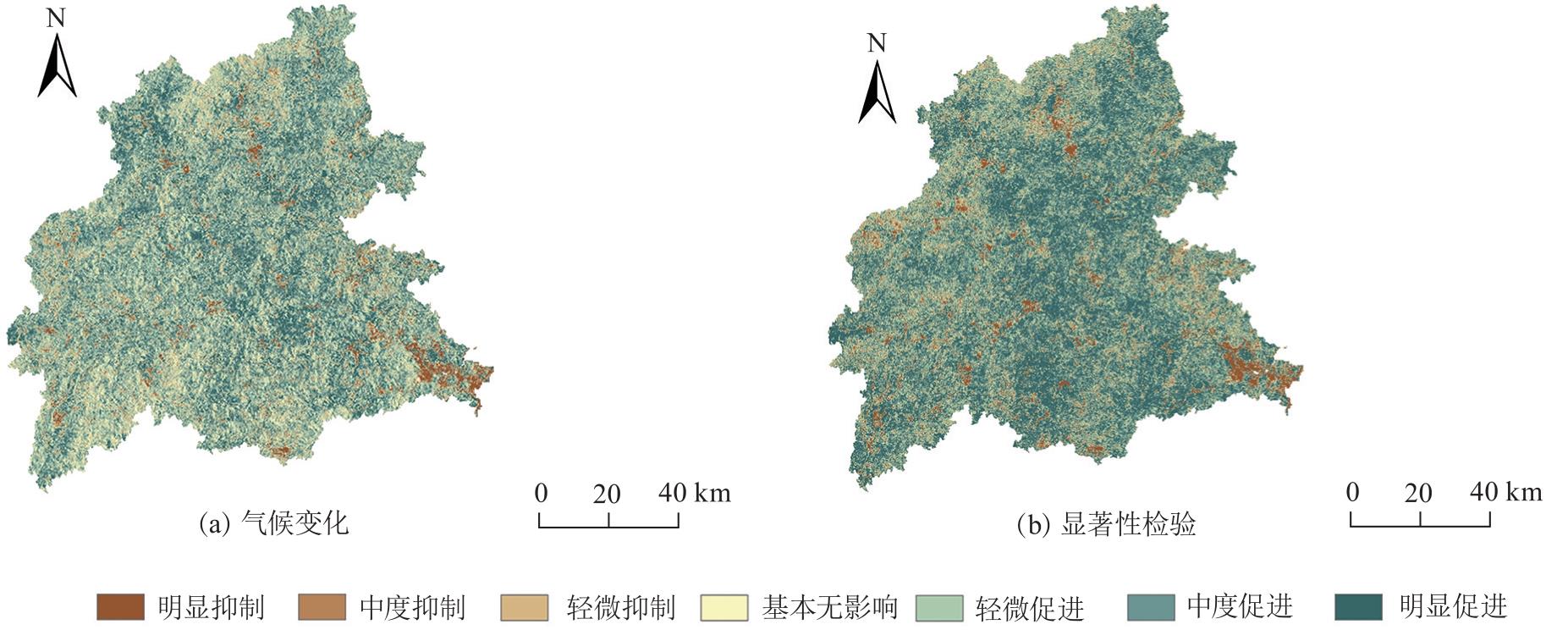
Tab.4
Influence of factors on NDVI in the Minjiang River Basin based and the share of area %
| 驱动因素 | 明显抑制 | 中度抑制 | 轻微抑制 | 基本无影响 | 轻微促进 | 中度促进 | 明显促进 |
|---|---|---|---|---|---|---|---|
| 气候变化 | 2.16 | 2.59 | 7.84 | 11.33 | 30.78 | 30.86 | 14.43 |
| 人类活动 | 3.58 | 3.52 | 6.94 | 6.33 | 18.78 | 28.89 | 31.96 |
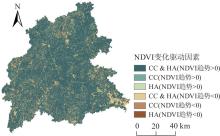
Fig.7
Spatial distribution of drivers of NDVI change in 2000—2020

Tab.5
Area share of spatial distribution of drivers
| NDVI趋势 | 驱动因素 | 面积占比/% |
|---|---|---|
| >0 | CC&HA | 71.72 |
| CC | 6.81 | |
| HA | 9.28 | |
| <0 | CC&HA | 6.00 |
| CC | 2.08 | |
| HA | 4.10 |
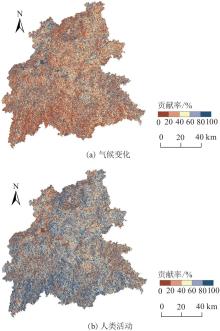
Fig.8
Distribution of the contribution of climate change and human activities to the change of NDVI in the Minjiang River Basin from 2000 to 2020
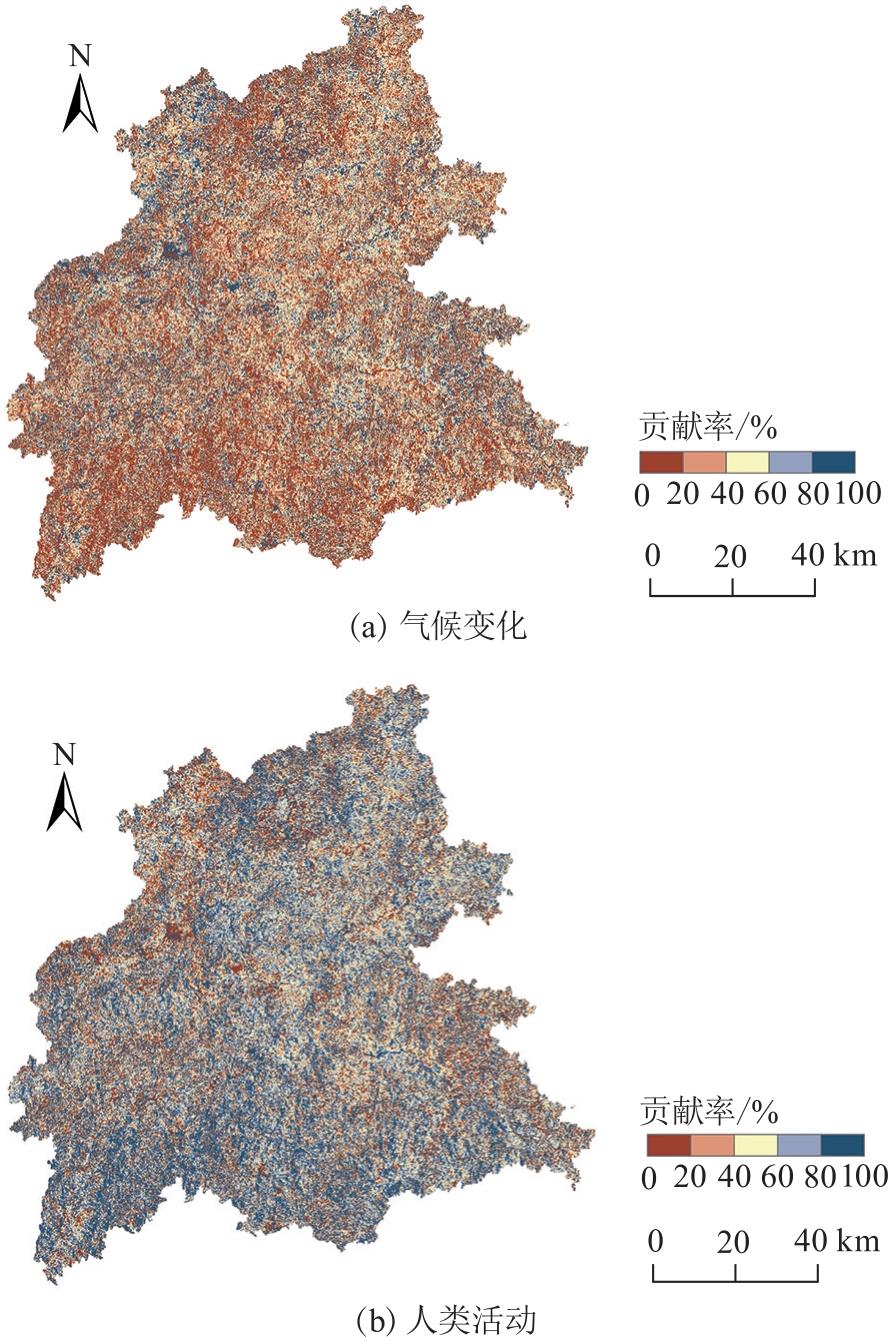
Tab.6
Contributions of drivers to NDVI changes in the Minjiang River Basin and the share of area
| 贡献率/% | 面积占比/% | |
|---|---|---|
| 气候变化 | 人类活动 | |
| 0~20 | 27.86 | 13.70 |
| 20<~40 | 24.07 | 11.17 |
| 40<~60 | 23.20 | 23.20 |
| 60<~80 | 11.16 | 24.06 |
| 80<~100 | 13.70 | 27.87 |
| [1] | KONG Dongdong, ZHANG Qiang, SINGH V P, et al. Seasonal vegetation response to climate change in the noethern hemisphere(1982—2013)[J]. Global and Planetary Change, 2017,148:1-8. |
| [2] | LI Peng, WANG Jing, LIU Mengmeng, et al. Spatio-temporal variation characteristics of NDVI and its response to climate on the Loess Plateau from 1985 to 2015[J]. Catena, 2021, 203(1):105331. |
| [3] | 田智慧, 任祖光, 魏海涛. 2000—2020年黄河流域植被时空演化驱动机制[J]. 环境科学, 2022, 43(2):743-751. |
| [4] | ZHANG Yan, ZHANG Luoqi, WANG Junyi, et al. 2023. Quantitative analysis of NDVI driving factors based on thegeographical detector model in the Chengdu-Chongqing region,China[J]. Ecological Indicators,2023,155:110978. |
| [5] |
韩炳宏, 周秉荣, 颜玉倩, 等. 2000—2018年间青藏高原植被覆盖变化及其与气候因素的关系分析[J]. 草地学报, 2019, 27(6):1651-1658.
doi: 10.11733/j.issn.1007-0435.2019.06.023 |
| [6] | 刘静, 温仲明, 刚成诚. 黄土高原不同植被覆被类型NDVI对气候变化的响应[J]. 生态学报, 2020, 40(2):678-691. |
| [7] | SHI Shouhai, WANG Xiaolei, HU Zirong, et al. Geographic detector-based quantitative assessment enhances attribution analysis of climate and topography factors to vegetation variation for spatial heterogeneity and coupling[J]. Global Ecology and Conservation, 2023,42:e02398. |
| [8] |
聂桐, 董国涛, 蒋晓辉, 等. 榆林地区植被时空分异特征及其影响因素研究[J]. 生态环境学报, 2022, 31(1):26-36.
doi: 10.16258/j.cnki.1674-5906.2022.01.004 |
| [9] | 高思琦, 董国涛, 蒋晓辉, 等. 基于地理探测器的三江源植被变化及自然驱动因子分析[J]. 水土保持研究, 2022, 29(4):336-343. |
| [10] | 聂桐, 董国涛, 蒋晓辉, 等. 基于地理探测器的河南省植被NDVI时空变化及驱动力分析[J]. 生态学杂志, 2024, 43(1):273-281. |
| [11] | 赵胜楠, 王宇, 乔旭宁, 等. 1987—2021年淮河流域FVC时空变化与驱动因素分析[J]. 农业机械学报, 2023, 54(4):180-190. |
| [12] | 杨欣, 薛华柱, 董国涛, 等. 1982—2022年祁连山植被变化及其驱动因子[J]. 生态学杂志, 2024, 43(6):1576-1586. |
| [13] | 高倩倩, 陈灿, 刘贺娜, 等. 闽江流域植被覆盖度时空变化及地形分异特征[J]. 林业资源管理, 2022(2):91-99. |
| [14] |
杨达, 易桂花, 张廷斌, 等. 青藏高原植被生长季NDVI时空变化与影响因素[J]. 应用生态学报, 2021, 32(4):1361-1372.
doi: 10.13287/j.1001-9332.202104.014 |
| [15] | 张春森, 胡艳, 史晓亮. 基于AVHRR和MODIS NDVI数据的黄土高原植被覆盖时空演变分析[J]. 应用科学学报, 2016, 34(6):702-712. |
| [16] | 陈云浩, 李晓兵, 史培军. 1983—1992年中国陆地NDVI变化的气候因子驱动分析[J]. 植物生态学报, 2001(6):716-720. |
| [17] | SUN Wenyi, SONG Xiaoyan, MU Xingmin, et al. Spatiotemporal vegetation cover variations associated with climate change and ecological restoration in the Loess Plateau[J]. Agricultural & Forest Meteorology, 2015,209-210:87-99. |
| [18] | 李震, 阎福礼, 范湘涛. 中国西北地区NDVI变化及其与温度和降水的关系[J]. 遥感学报, 2005(3):308-313. |
| [19] | EVANS J, GEERKEN R. Discrimination between climate and human-induced dryland degradation[J]. Journal of Arid Environments, 2004, 57(4):535-554. |
| [20] | WESSELS K J, PRINCE S D, MALHERBE J, et al. Can human-induced land degradation be distinguished from the effects of rainfall variability? A case study in South Africa[J]. Journal of Arid Environments, 2007, 68(2):271-297. |
| [21] |
金凯, 王飞, 韩剑桥, 等. 1982—2015年中国气候变化和人类活动对植被NDVI变化的影响[J]. 地理学报, 2020, 75(5):961-974.
doi: 10.11821/dlxb202005006 |
| [22] | 王军, 严有龙, 王金满, 等. 闽江流域生境质量时空演变特征与预测研究[J]. 生态学报, 2021, 41(14):5837-5848. |
| [23] | 陈增文. 基于NDVI的生态环境变化分析:以福建省龙岩市长汀县为例[J]. 化学工程与装备, 2012(6):204-207. |
| [24] | WANG Zhenhong, DAUN Chuanqun, YUAN Li, et al. Assessment of the restoration of a degraded semi-humid evergreen broadleaf forest ecosystem by combined single-indicator and comprehensive model method[J]. Ecological Engineering, 2010, 36(6):757-767. |
| [25] | DENG Lei, SHANGGUAN Zhouping, LI Rui. Effects of the grain-for-green program on soil erosion in China[J]. International Journal of Sediment Research, 2012, 27(1):120-127 |
| [26] | 陈旻. 全省森林覆盖率连续45年保持全国首位[N]. 福建日报,2024-05-31(1). |
| [27] | 国务院. 国务院关于支持福建省深入实施生态省战略加快生态文明先行示范区建设的若干意见[EB/OL].(2014-04-09)[2024-09-02]. https://www.gov.cn/zhengce/zhengceku/2014-04/09/content_8745.htm. |
| [28] | 台风“苏拉”“达维”“海葵”造成全国12省市受灾[J]. 中国应急管理, 2012(8):66. |
| [29] | 徐涵秋. 城市不透水面与相关城市生态要素关系的定量分析[J]. 生态学报, 2009, 29(5):2456-2462. |
| [30] |
张灿, 徐涵秋, 张好, 等. 南方红壤典型水土流失区植被覆盖度变化及其生态效应评估:以福建省长汀县为例[J]. 自然资源学报, 2015, 30(6):917-928.
doi: 10.11849/zrzyxb.2015.06.003 |
| [31] | 张春, 柯荫渠, 沈良坤, 等. 让“绿水青山”源源不断带来“金山银山”南平市应急管理系统守住自然生态安全边界,助推高质量发展[J]. 安全与健康, 2020(12):24-26. |
| [32] | 余群. 南平:守护生态环境“高颜值”[J]. 人民政坛, 2018,(12):25-26. |
| [33] | 陈少勇. 顺昌县人大:用力用心用智推进生态高质量发展[J]. 人民政坛, 2024(5):37-38. |
| Viewed | ||||||
|
Full text |
|
|||||
|
Abstract |
|
|||||
