

Forest and Grassland Resources Research ›› 2024›› Issue (4): 12-20.doi: 10.13466/j.cnki.lczyyj.2024.04.002
• Integrated Management and Administration • Previous Articles Next Articles
LIU Tong1( ), BAO Shouchen2, YUAN Tao2()
Received:2024-05-05
Revised:2024-08-01
Online:2024-08-28
Published:2025-04-18
CLC Number:
LIU Tong, BAO Shouchen, YUAN Tao. Advances in Research on Plant Carbon Sequestration Capacity Across Different Vegetation Zones in China[J]. Forest and Grassland Resources Research, 2024, (4): 12-20.
Add to citation manager EndNote|Ris|BibTeX
URL: https://www.lyzygl.com.cn/EN/10.13466/j.cnki.lczyyj.2024.04.002
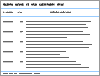
Tab.1
Methods for measuring plant carbon sequestration
| 方法 | 测量因子 | 主要适用对象 | 优点 | 缺点 | 应用情况 | |
|---|---|---|---|---|---|---|
| 样地清查法 | 平均生物量法 | 生物量 | 森林生物量计量 | 简便易操作;节约成本 | 需要大量实测数据;需要考虑树种生长特性 | 森林生物量估算、碳汇能力评估 |
| 生物量转换因子法 | 生物量 | 森林生物量计量 | 适用于大规模评估和动态变化评估;可设定不同参数 | 部分模型存在参数修正需求 | 森林总生物量评估、碳汇量计算 | |
| 模型测算法 | 碳汇量 | 森林碳汇量估算 | 操作简单、计算快捷 | 部分模型存在参数修正需求 | 森林碳汇量估算、区域碳汇动态监测 | |
| 同化量法 | 净光合速率、蒸 腾速率、二氧化碳 浓度、气孔导度 | 单株碳汇量测定 | 可评价不同植物固碳能力 | 环境条件不确定性;植株不同部位光合作用差异导致估算不确定性 | 植物固碳能力评估、筛选高碳汇物种、光合作用影响因子分析 | |
| 遥感估算法 | 植被分布、碳汇 能力分布 | 大面积碳汇估算 | 省时省力;快速实现估算;有效获大尺度数据 | 在具体树种碳汇值测定上应用较少;存在复杂性和不确定性 | 大尺度碳汇估算、区域碳汇分布研究 | |
| 微气象法 | 二氧化碳通量 | 二氧化碳通量观测 | 获取直观、连续数据;了解碳汇响应过程 | 设备昂贵;观测时间长;对环境因子要求高 | 二氧化碳通量观测、碳汇对环境响应机理研究 | |
Tab.2
Carbon sequestration per unit leaf area in plants of different growth types
| 生长类型 | 乔木 | 灌木 | 水生植物 | 藤本植物 | 地被植物 | ||||||||||||||
|---|---|---|---|---|---|---|---|---|---|---|---|---|---|---|---|---|---|---|---|
| 种数/ 个 | 平均值/ [g/(m2·d)] | 最高值/ [g/(m2·d)] | 种数/ 个 | 平均值/ [g/(m2·d)] | 最高值/ [g/(m2·d)] | 种数/ 个 | 平均值/ [g/(m2·d)] | 最高值/ [g/(m2·d)] | 种数/ 个 | 平均值/ [g/(m2·d)] | 最高值/ [g/(m2·d)] | 种数/ 个 | 平均值/ [g/(m2·d)] | 最高值/ [g/(m2·d)] | |||||
| 温带针阔混交林区 | 23 | 18.85 | 33.27 (垂枝榆) | 18 | 16.74 | 43.74 (文冠果) | 0 | — | — | 0 | — | — | 0 | — | — | ||||
| 暖温带落叶阔叶林区 | 95 | 10.38 | 22.03 (绦柳) | 43 | 8.44 | 14.32 (小叶女贞) | 3 | 14.57 | 19.00 (芦苇) | 4 | 10.36 | 15.04 (山荞麦) | 8 | 11.10 | 36.19 (苜蓿) | ||||
| 亚热带常绿阔叶林区 | 182 | 6.24 | 16.69 (乌桕) | 105 | 6.38 | 19.97 (紫薇) | 1 | 10.13 | 10.13 (芦苇) | 1 | 5.81 | 5.81 (紫藤) | 12 | 11.94 | 14.44 (鬼针草) | ||||
| 热带雨林和季雨林区 | 21 | 11.52 | 25.41 (尖叶木犀榄) | 25 | 19.95 | 78.56 (佛肚竹) | 0 | — | — | 7 | 7.14 | 9.81 (爬山虎) | 14 | 9.70 | 22.87 (蟛蜞菊) | ||||
| 温带草原区 | 33 | 26.34 | 53.24 (紫穗槐) | 7 | 35.99 | 47.10 (连翘) | 0 | — | — | 0 | — | — | 4 | 19.62 | 27.72 (萱草) | ||||
| 温带荒漠区 | 23 | 10.45 | 14.83 (灰榆) | 7 | 10.88 | 12.31 (栒子) | 0 | — | — | 0 | — | — | 0 | 7.31 | 16.15 (披针叶黄华) | ||||
Tab.3
Carbon sequestration per unit leaf area of coniferous and broad-leaved tree species
| 植被分区 | 针叶树种数/ 个 | 平均值/ [g/(m2·d)] | 最高值/ [g/(m2·d)] | 阔叶树种数/ 个 | 平均值/ [g/(m2·d)] | 最高值/ [g/(m2·d)] |
|---|---|---|---|---|---|---|
| 温带针阔混交林区 | 0 | — | — | 41 | 17.81 | 43.74(文冠果) |
| 暖温带落叶阔叶林区 | 19 | 7.42 | 13.33(刺柏) | 135 | 9.94 | 22.03(绦柳) |
| 亚热带常绿阔叶林区 | 16 | 7.49 | 15.49(落羽杉) | 271 | 6.27 | 19.97(紫薇) |
| 热带雨林和季雨林区 | 0 | — | — | 46 | 17.14 | 78.56(佛肚竹) |
| 温带草原区 | 9 | 17.41 | 35.64(油松) | 31 | 31.31 | 53.24(紫穗槐) |
| 温带荒漠区 | 2 | 7.69 | 8.42(油松) | 28 | 9.14 | 14.83(灰榆) |
Tab.4
Carbon sequestration per unit leaf area of evergreen and deciduous plants
| 植被分区 | 常绿树种数/ 个 | 平均值/ [g/(m2·d)] | 最高值/ [g/(m2·d)] | 落叶树种数/ 个 | 平均值/ [g/(m2·d)] | 最高值/ [g/(m2·d)] |
|---|---|---|---|---|---|---|
| 温带针阔混交林区 | 0 | — | — | 41 | 17.81 | 43.74(文冠果) |
| 暖温带落叶阔叶林区 | 31 | 6.73 | 13.33(刺柏) | 123 | 10.27 | 22.03(绦柳) |
| 亚热带常绿阔叶林区 | 141 | 6.24 | 14.44(鬼针草) | 170 | 6.42 | 19.97(紫薇) |
| 热带雨林和热带季雨林区 | 61 | 15.29 | 78.56(佛肚竹) | 6 | 7.66 | 14.22(鸢尾) |
| 温带草原区 | 11 | 17.69 | 35.64(油松) | 33 | 30.82 | 53.24(紫穗槐) |
| 温带荒漠区 | 4 | 7.50 | 9.96(冰草) | 29 | 12.04 | 16.15(披针叶黄华) |
Tab.5
Dominant tree species with carbon sequestration capacity and carbon sequestration per unit leaf area in various vegetation regions of Chinag/(m2·d)
| 植被分区 | 上层乔木 | 中层灌木或小乔木 |
|---|---|---|
| 温带针阔混交林区 | 垂枝榆(33.27)梓树(32.03)山槐(29.96)黄檗(26.60)新疆杨(22.63) | 文冠果(43.74)紫丁香(35.70)重瓣榆叶梅(32.71)桃叶卫矛(30.44)海棠(29.96) |
| 暖温带落叶阔叶林区 | 绦柳(22.03)龙爪槐(20.07)臭椿(19.84)英桐(18.96)银中杨(17.36) | 卫矛(18.04)黄栌(16.93)丁香(14.67)小叶女贞(14.32)珍珠梅(13.86) |
| 亚热带常绿阔叶林区 | 乌桕(16.69)栾树(15.86)落羽杉(15.49)竹柳(14.26)广玉兰(14.06) | 紫薇(19.97)夹竹桃(17.05)地桃花(13.88)女贞(13.32)山茶(13.22) |
| 热带雨林和季雨林区 | 尖叶木犀榄(25.41)革叶榕(16.18)竹柏(14.97)假苹婆(11.42) | 佛肚竹(78.56)金脉爵床(51.10)金叶假连翘(44.37)海桐(28.01)狗牙花(27.01) |
| 温带草原区 | 紫穗槐(53.24)白蜡(50.98)暴马丁香(46.15)国槐(45.88)新疆杨(45.57) | 连翘(47.10)榆叶梅(42.69)丁香(42.56)黄刺玫(39.35)卫矛(36.72) |
| 温带荒漠区 | 披针叶黄华(16.15)灰榆(14.83)山杨(13.90) | 栒子(12.31) |
| [1] | LUO Yiqi, WENG Ensheng. Dynamic disequilibrium of the terrestrial carbon cycle under global change[J]. Trends in Ecology & Evolution, 2011, 26(2):96-104. |
| [2] | Intergovernmental panel on climate change. Climate change 2021:The physical science basis.Contribution of working group I to the sixth assessment report of the intergovernmental panel on climate change[R]. Cambridge: Cambridge University Press, 2021. |
| [3] | 杨玉坡. 全球气候变化与森林碳汇作用[J]. 四川林业科技, 2010, 31(1):14-17. |
| [4] | 王敏, 石乔莎. 城市绿色碳汇效能影响因素及优化研究[J]. 中国城市林业, 2015, 13(4):1-5. |
| [5] | FANG Jingyun, GUO Zhaodi, PIAO Shilong, et al. Terrestrial vegetation carbon sinks in China,1981-2000[J]. Science in China(Series D:Earth Sciences), 2007(9):1341-1350. |
| [6] | 杨元合, 石岳, 孙文娟, 等. 中国及全球陆地生态系统碳源汇特征及其对碳中和的贡献[J]. 中国科学:生命科学, 2022, 52(4):534-574. |
| [7] | 王敏, 石乔莎. 城市高密度地区绿色碳汇效能评价指标体系及实证研究—以上海市黄浦区为例[J]. 中国园林, 2016, 32(8):18-24. |
| [8] | 王晶懋, 范李一璇, 韩都, 等. “双碳”目标下的西安地区绿地植物碳汇矩阵量化与配置模式研究[J]. 中国园林, 2023, 39(2):108-113. |
| [9] | 童家靖, 黄伟, 黎秀琼, 等. 我国园林绿地的碳汇研究进展[J]. 热带生物学报, 2018, 9(1):117-122. |
| [10] | 周健, 肖荣波, 庄长伟, 等. 城市森林碳汇及其核算方法研究进展[J]. 生态学杂志, 2013, 32(12):3368-3377. |
| [11] | 方精云, 陈安平, 赵淑清, 等. 中国森林生物量的估算:对Fang等Science一文(Science,2001,291:2320-2322)的若干说明[J]. 植物生态学报, 2002(2):243-249. |
| [12] | 魏小芳. 西安城区树木多样性及其碳储量的研究[D]. 西安: 西安建筑科技大学, 2016. |
| [13] | 张桂莲, 邢璐琪, 张浪, 等. 城市绿地碳汇计量监测方法研究进展[J]. 园林, 2022, 39(1):4-9. |
| [14] | 江佩宜, 戴菲. 城市绿地碳汇测算方法研究进展[J]. 中国城市林业, 2024, 22(1):87-93. |
| [15] | 邢爽, 张思冲, 许瀛元. 黑龙江省森工林区野生植物碳汇效益研究[J]. 森林工程, 2013, 29(2):38-40. |
| [16] | 欧阳钦. 长沙望城区森林植被生物量及碳储量研究[D]. 长沙: 中南林业科技大学, 2014. |
| [17] | 季文旭, 冯仲科, 张瀚月, 等. 基于立木胸径生长率模型的乔木林碳汇潜力评估[J]. 中国农业科技导报, 2024, 26(1):99-109. |
| [18] | 张玉阳, 周春玲, 董运斋, 等. 基于i-Tree模型的青岛市南区行道树组成及生态效益分析[J]. 生态学杂志, 2013, 32(7):1739-1747. |
| [19] |
熊金鑫, 祁慧君, 王倩茹, 等. 基于i-Tree模型的城市小区行道树生态效益评价[J]. 南京林业大学学报(自然科学版), 2019, 43(2):128-36.
doi: 10.3969/j.issn.1000-2006.201808038 |
| [20] | 彭立华, 陈爽, 刘云霞, 等. Citygreen模型在南京城市绿地固碳与削减径流效益评估中的应用[J]. 应用生态学报, 2007,(6):1293-1298. |
| [21] |
李佳珂, 邵战林. 基于PLUS和InVEST模型的乌鲁木齐市碳储量时空演变与预测[J]. 干旱区研究, 2024, 41(3):499-508.
doi: 10.13866/j.azr.2024.03.14 |
| [22] | 薛兴燕, 赵杰, 石蒙蒙, 等. 基于i-Tree模型的郑州市行道树生态效益评估[J]. 河南科学, 2018, 36(9):1460-1467. |
| [23] | 王丽勉, 胡永红, 秦俊, 等. 上海地区151种绿化植物固碳释氧能力的研究[J]. 华中农业大学学报, 2007(3):399-401. |
| [24] | 孙雅伟. 天津城市绿地常用乔木固碳规律及效益评估研究[D]. 天津: 天津大学. 2019. |
| [25] | 王修信, 高凤飞, 刘馨, 等. 北京城市绿地三种常见林木冠层光合作用特征[J]. 科学技术与工程, 2019, 19(20):104-109. |
| [26] | 徐新良, 曹明奎. 森林生物量遥感估算与应用分析[J]. 地球信息科学, 2006(4):122-128. |
| [27] | 周小梅, 李曦. 蕊高校校园绿地植物群落固碳效益分析及高固碳植物群落优化对策——以湖南城市学院为例[J]. 农业与技术, 2023, 43(11):123-128. |
| [28] | 刘毅, 王婧, 车轲, 等. 温室气体的卫星遥感——进展与趋势[J]. 遥感学报, 2021, 25(1):53-64. |
| [29] | 于贵瑞, 方华军, 伏玉玲, 等. 区域尺度陆地生态系统碳收支及其循环过程研究进展[J]. 生态学报, 2011, 31(19):5449-5459. |
| [30] | 陈文婧, 李春义, 何桂梅, 等. 北京奥林匹克森林公园绿地碳交换动态及其环境控制因子[J]. 生态学报, 2013, 33(20):6712-6720. |
| [31] | 毛春艳. 西北高寒区人工幼龄林生态系统碳储量估算及其空间分异特征研究[D]. 贵州: 贵州师范大学, 2022. |
| [32] | 蔡燕红, 宋振亚, 李亚蔚, 等. 中国陆地与海岛植被分类研究综述与展望[J]. 海洋学报, 2016, 38(4):95-108. |
| [33] | 侯学煜. 中国自然地理, 植物地理(下册)[M]. 北京: 科学出版社, 1988. |
| [34] | 陈少鹏. 长春市30种主要园林树木物候相及生态功能研究[D]. 长春: 吉林农业大学, 2011. |
| [35] | 宋卓琴, 康红梅, 牛艳, 等. 太原市主要园林植物春季固碳释氧和降温增湿效应[J]. 山西农业科学, 2018, 46(10):1685-1690. |
| [36] | 冯晶红, 刘德富, 吴耕华, 等. 三峡库区消落带适生植物固碳释氧能力研究[J]. 水生态学杂志, 2020, 41(1):1-8. |
| [37] | 郭新想. 居住区绿化植物固碳能力评价方法研究[D]. 重庆: 重庆大学, 2010. |
| [38] | 周建华, 谭春华, 王立清, 等. 包头市园林绿化植物生态功能定量分析[J]. 安徽农业科学, 2018, 46(20):96-99. |
| [39] | 陈高路. 贺兰山典型植物光合特性及固碳释氧能力研究[D]. 银川: 宁夏大学, 2021. |
| [40] | 王忠君. 福州国家森林公园生态效益与自然环境旅游适宜性评价研究[D]. 北京: 北京林业大学, 2004. |
| [41] | 郭杨, 卓丽环. 哈尔滨居住区常用的12种园林植物固碳释氧能力研究[J]. 安徽农业科学, 2014, 42(17):5533-5536. |
| [42] | 张婉茹. 基于碳汇功能的植物群落优化研究[D]. 沈阳: 沈阳建筑大学, 2020. |
| [43] | 徐丽华, 陈婷, 张瑞华. 低碳园林研究综述及研究热点分析[J]. 园林, 2022, 39(1):10-17. |
| [44] | 包志毅, 马婕婷. 试论低碳植物景观设计和营造[J]. 中国园林, 2011, 27(1):7-10. |
| [45] |
陈科屹, 王建军, 何友均, 等. 黑龙江大兴安岭重点国有林区森林碳储量及固碳潜力评估[J]. 生态环境学报, 2022, 31(9):1725-1734.
doi: 10.16258/j.cnki.1674-5906.2022.09.002 |
| [46] | 李蕊, 姚鳗卿, 李屹楠, 等. 我国高碳汇植物研究现状[J]. 山东林业科技, 2023, 53(3):104-110. |
| [47] | 梁嘉琳. 基于“双碳”目标的城市滨河景观优化设计研究[D]. 西安: 西安建筑科技大学, 2023. |
| Viewed | ||||||
|
Full text |
|
|||||
|
Abstract |
|
|||||
