

Forest and Grassland Resources Research ›› 2026›› Issue (2): 125-136.doi: 10.13466/j.cnki.lczyyj.2026.02.012
• Review • Previous Articles
GUI Qing1,2,3,4( ), YANG Jianxin1,2,3,4, MA Changle1,2,3,4,5()
Received:2025-08-19
Revised:2026-04-08
Online:2026-04-28
Published:2026-09-30
CLC Number:
GUI Qing, YANG Jianxin, MA Changle. Research progress on mechanisms and mitigation strategies of allelochemicals in invasive plant[J]. Forest and Grassland Resources Research, 2026, (2): 125-136.
Add to citation manager EndNote|Ris|BibTeX
URL: https://www.lyzygl.com.cn/EN/10.13466/j.cnki.lczyyj.2026.02.012
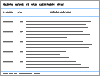
Tab.1
Main allelochemicals of certain invasive plants and release sites
| 入侵植物 | 释放部位 | 主要化感物质 | 参考文献 |
|---|---|---|---|
| 南美蟛蜞菊 Sphagneticola trilobata | 茎叶 | Α-水芹烯(α-phellandrene)、柠檬烯(Limonene)、对伞花烃(p-Cymene) | [ |
| 肿柄菊 Tithonia diversifolia | 全株 | 1β-甲氧基五味子叶素(1β-methoxydiversifolin)、肿柄菊内酯A(tagitinin A)、 肿柄菊内酯C(tagitinin C) | [ |
| 微甘菊 Mikania micrantha | 残体和根系 | 米卡诺内酯(mikanolide)、脱氧米卡诺内酯(deoxymikanolide)、蔓生内酯(scandenolide)、二氢蔓生内酯(dihydroscandenolide)、二氢米卡诺内酯(dihydromikanolide) | [ |
| 豚草 Ambrosia artemisiifolia | 根系 | Eudesmanol A、Eudesmanol B、13-trihydroxyeudesm-7(11)-en-6α,12-olide | [ |
| 五爪金龙 Ipomoea cairica | 叶 | β-柏木烯(β-Cedrene)、石竹烯(β-Caryophyllene)、肉桂酸(Cinnamic acid)、 月桂酸(Lauric acid) | [ |
| 土荆芥 Dysphania ambrosioides | 果实、叶 | α-松油烯(α-Terpinene)、驱蛔素(Ascaridole) | [ |
| 根系 | 棕榈酸(Palmitic acid)、邻苯二甲酸二丁酯(Dibutyl phthalate) | [ |
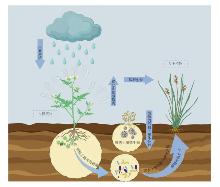
Fig.1
The release pathways of allelochemicals from invasive plants
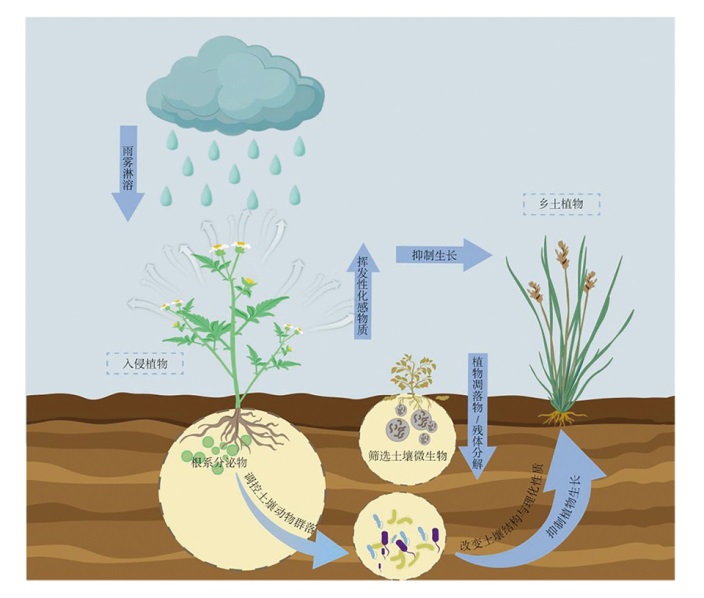
Tab.2
Mechanisms of action of major allelochemicals in invasive plants
| 入侵植物 | 主要化感物质 | 作用机制 | 参考文献 |
|---|---|---|---|
| 飞机草 Chromolaena odorata | 槲皮素Quercetin、山柰酚Kaempferol | 破坏植物线粒体功能,抑制叶绿体光 系统Ⅱ的光合效率 | [ |
| 北美车前 Plantago virginica | 4-甲基儿茶酚4-methylcatechol | 干扰活性氧代谢稳态 | [ |
| 白茅 Imperata cylindrica | 烟叶酮Tabanone、异丁香酚Isoeugenol | 破坏细胞膜完整性以及抑制光合作用 | [ |
| 肿柄菊 Tithonia diversifolia | 1β-甲氧基五味子叶素1βmethoxydiversifolin | 干扰细胞分裂、破坏细胞膜完整性, 抑制受体植物生长 | [ |
| 马缨丹 Lantana camara | Lantadene A、Lantadene B | 抑制受体植物生长 | [ |
| 三裂叶豚草 Ambrosia trifida | 对香豆酸Coumaric acid、阿魏酸Ferulic acid | 抑制受体植物生长 | [ |
| 紫茎泽兰 Ageratina adenophora | 泽兰二酮9-Oxo-10,11-dehydroageraphorone、 羟基泽兰酮9βHydroxyageraphorone | 破坏细胞膜、阻碍呼吸、扰乱激素与 水分平衡 | [ |
| 紫茉莉 Mirabilis jalapa | β-谷甾醇β-Sitosterol | 抑制植物种子萌发与幼苗生长 | [ |
| 黄顶菊 Mirabilis jalapa | 紫云英苷Astragalin | 改变土壤细菌群落结构 | [ |
| [1] |
牛红玉, 沈浩, 叶万辉. 外来植物入侵的全境性研究进展与展望[J]. 生物多样性, 2010, 18(6):559-568.
doi: 10.3724/SP.J.2010.559 |
| [2] | IPBES. IPBES invasive alien species assessment:summary for policymakers[R/OL](2024-01-18)[2025-08-15].https://doi.org/10.5281/zenodo.11254974. |
| [3] | 杜素洁, 郭建洋, 赵浩翔, 等. 近十年我国入侵生物预防与监控研究[J]. 植物保护, 2023, 49(5):410-418,440. |
| [4] |
曹婧, 徐晗, 潘绪斌, 等. 中国草地外来入侵植物现状研究[J]. 草地学报, 2020, 28(1):1-11.
doi: 10.11733/j.issn.1007-0435.2020.01.001 |
| [5] | 张秋霞, 李德宝, 夏顺颖, 等. 云南入侵植物的生物学性状初步研究[J]. 广西植物, 2018, 38(3):269-280. |
| [6] | 李博, 徐炳声, 陈家宽. 从上海外来杂草区系剖析植物入侵的一般特征[J]. 生物多样性, 2001, 9(4):446-457. |
| [7] | 杨玉莲, 刘小丽, 吴丽君, 等. 川中丘陵区柏木(Cupressus funebris)土壤浸提液对3种农作物种子萌发和幼苗生长的影响[J]. 应用与环境生物学报, 2020, 26(2):394-399. |
| [8] |
Jeschke J M, Gómez-Aparicio L, Haider S, et al. Support for major hypotheses in invasion biology is uneven and declining[J]. NeoBiota, 2012, 14:1-20.
doi: 10.3897/neobiota.14.3435 |
| [9] |
Zheng Yulong, Feng Yulong, Zhang Likun, et al. Integrating novel chemical weapons and evolutionarily increased competitive ability in success of a tropical invader[J]. New Phytologist, 2015, 205(3):1350-1359.
doi: 10.1111/nph.13135 pmid: 25367824 |
| [10] |
Kalisz S, Kivlin S N, Bialic-Murphy L, et al. Allelopathy is pervasive in invasive plants[J]. Biological Invasions, 2021, 23:367-371.
doi: 10.1007/s10530-020-02383-6 |
| [11] |
Inderjit, Simberloff D, Kaur H, et al. Novel chemicals engender myriad invasion mechanisms[J]. The New Phytologist, 2021, 232(3):1184-1200.
doi: 10.1111/nph.v232.3 |
| [12] |
师小平, 陈银萍, 闫志强, 等. 植物化感作用研究进展[J]. 生物技术通报, 2020, 36(6):215-222.
doi: 10.13560/j.cnki.biotech.bull.1985.2019-0930 |
| [13] |
Inderjit, Duke S O. Ecophysiological aspects of allelopathy[J]. Planta, 2003, 217(4):529-539.
doi: 10.1007/s00425-003-1054-z pmid: 12811559 |
| [14] |
Mushtaq W, Ain Q, Siddiqui M B, et al. Cytotoxic allelochemicals induce ultrastructural modifications in Cassia tora L.and mitotic changes in Allium cepa L.:a weed versus weed allelopathy approach[J]. Protoplasma, 2019, 256(3):857-871.
doi: 10.1007/s00709-018-01343-1 pmid: 30656457 |
| [15] |
Verdeguer M, Sánchez-Moreiras A M, Araniti F. Phytotoxic effects and mechanism of action of essential oils and terpenoids[J]. Plants, 2020, 9(11):1571.
doi: 10.3390/plants9111571 |
| [16] | 周凯, 郭维明, 徐迎春. 菊科植物化感作用研究进展[J]. 生态学报, 2004, 24(8):1776-1784. |
| [17] |
Chang Xiaohan, Wang Ying, Sun Jingguo, et al. Mitigation of tobacco bacteria wilt with microbial degradation of phenolic allelochemicals[J]. Scientific Reports, 2022, 12:20716.
doi: 10.1038/s41598-022-25142-0 pmid: 36456681 |
| [18] |
Kostina-Bednarz M, Płonka J, Barchanska H. Allelopathy as a source of bioherbicides:challenges and prospects for sustainable agriculture[J]. Reviews in Environmental Science and Bio/Technology, 2023, 22(2):471-504.
doi: 10.1007/s11157-023-09656-1 |
| [19] |
Oldroyd G E D. Speak,friend,and enter:signalling systems that promote beneficial symbiotic associations in plants[J]. Nature Reviews Microbiology, 2013, 11(4):252-263.
doi: 10.1038/nrmicro2990 pmid: 23493145 |
| [20] |
Wang Miao, Jia Yongxia, Jian Guotai, et al. Inhibitor treatment and subcellular localization analysis reveal the contribution of a cytosolic terpene synthase to the substantial release of anti-insect monoterpenes by Sphagneticola trilobata (L.) Pruski[J]. Journal of Advanced Research, 2025, 77:91-105.
doi: 10.1016/j.jare.2025.01.047 |
| [21] |
Kato-Noguchi H. Involvement of allelopathy in the invasive potential of Tithonia diversifolia[J]. Plants, 2020, 9(6):766.
doi: 10.3390/plants9060766 |
| [22] |
Clements D R, Kato-Noguchi H. Defensive mechanisms of Mikania micrantha likely enhance its invasiveness as one of the world’s worst alien species[J]. Plants, 2025, 14(2):269.
doi: 10.3390/plants14020269 |
| [23] |
Liu Zhixiang, Zhang Nan, Ma Xiaoqing, et al. Sesquiterpenes from Ambrosia artemisiifolia and their allelopathy[J]. Frontiers in Plant Science, 2022, 13:996498.
doi: 10.3389/fpls.2022.996498 |
| [24] |
陈金慧, 马慧燕, 陈煜, 等. 五爪金龙两种化感作用途径释放的化学成分分析及其效应研究[J]. 草业学报, 2022, 31(2):88-100.
doi: 10.11686/cyxb2020525 |
| [25] | 刘世尧, 张智宏, 卞京军, 等. 重庆野生土荆芥不同部位精油成分分析[J]. 植物资源与环境学报, 2025, 34(3):106-109. |
| [26] | 陶文琴, 许镇健, 黄丽宜, 等. 阔叶丰花草对茄科作物的化感效应[J]. 贵州农业科学, 2014, 42(10):91-94. |
| [27] | 王旭萍, 刘强, 杨珊. 2种菊科入侵植物之间的化感作用[J]. 江苏农业科学, 2020, 48(1):114-120. |
| [28] | 邰凤姣, 韩彩霞, 邵华. 入侵植物意大利苍耳不同部位挥发油的化感作用及其化学成分的比较分析[J]. 生物学杂志, 2015, 32(2):36-41. |
| [29] | 赵晓红, 杨殿林, 曲波, 等. 黄顶菊入侵对土壤氨氧化细菌群落结构及多样性的影响[J]. 生态学杂志, 2014, 33(6):1492-1500. |
| [30] | 路秀蓉, 刘婷, 王瑞, 等. 外来入侵植物三裂叶豚草凋落叶分解对土壤线虫群落结构的影响[J]. 生态学杂志, 2016, 35(9):2369-2378. |
| [31] |
王占娣, 赵静, 陈绍娟, 等. 入侵植物肿柄菊不同组织提取液对千金子的化感作用[J]. 热带作物学报, 2023, 44(2):385-393.
doi: 10.3969/j.issn.1000-2561.2023.02.018 |
| [32] | Yang Ruyi, Mei Lingxiao, Tang Jianjun, et al. Allelopathic effects of invasive Solidago canadensis L.on germination and growth of native Chinese plant species[J]. Allelopathy Journal, 2007, 19(1):241-248. |
| [33] | 周晓奎. 入侵植物紫茉莉的生理生态特性和化感作用的初步研究[D]. 成都: 四川师范大学, 2008. |
| [34] | 康小武, 全国明, 章家恩, 等. 入侵植物马缨丹叶片挥发物的化感作用[J]. 中国农学通报, 2014, 30(22):287-291. |
| [35] |
Hassan W H B, Abdel Ghani A E, Taema E A, et al. Chemical profile,virtual screening,and virulence-inhibiting properties of Sphagneticola trilobata L.essential oils against Pseudomonas aeruginosa[J]. Scientific Reports, 2025, 15:11964.
doi: 10.1038/s41598-025-94486-0 |
| [36] | 吴清莹, 林宇龙, 孙一航, 等. 根系分泌物对植物生长和土壤养分吸收的影响研究进展[J]. 中国草地学报, 2021, 43(11):97-104. |
| [37] | 赵金莉, 程春泉, 顾晓阳, 等. 入侵植物紫茉莉根系分泌物对土壤微生态环境的影响[J]. 河南师范大学学报(自然科学版), 2014, 42(3):95-99. |
| [38] | 刘纯, 黄红娟, 张朝贤, 等. 假高粱根系分泌物对土壤细菌群落多样性的影响[J]. 生态环境学报, 2013, 22(7):1124-1128. |
| [39] | 王玉书, 刘海, 袁玲. 空心莲子草根系分泌物对无机磷细菌的负化感效应[J]. 土壤学报, 2017, 54(6):1486-1496. |
| [40] | 王煜, 何胜利, 张红, 等. 土荆芥凋落物腐解液的化感效应及根边缘细胞的响应机制[J]. 安全与环境学报, 2024, 24(8):3280-3290. |
| [41] | 李军, 王瑞龙. 入侵植物肿柄菊叶片凋落物化感潜力的研究[J]. 生态科学, 2015, 34(6):100-104. |
| [42] |
Bakacsy L, Kardos L V, Szepesi Á, et al. Investigation of the allelopathic effect of two invasive plant species in rhizotron system[J]. Life, 2024, 14(4):475.
doi: 10.3390/life14040475 |
| [43] |
Peñuelas J, Ribas-Carbó M, Giles L. Effects of allelochemicals on plant respiration and oxygen isotope fractionation by the alternative oxidase[J]. Journal of Chemical Ecology, 1996, 22(4):801-805.
doi: 10.1007/BF02033587 pmid: 24227586 |
| [44] |
Verma P, Blaise D, Sheeba J A, et al. Allelopathic potential and allelochemicals in different intercrops for weed management in rainfed cotton[J]. Current Science, 2021, 120(6):1035-1039.
doi: 10.18520/cs/v120/i6/1035-1039 |
| [45] | 聂呈荣, 曾任森, 黎华寿, 等. 三裂叶蟛蜞菊对花生化感作用的生理生化机理[J]. 花生学报, 2002, 31(3):1-5. |
| [46] | 王婧怡, 邬彩霞, 赵国琦. 植物化感作用的分子机理及差异蛋白质组学研究进展[J]. 江苏农业科学, 2017, 45(13):8-11. |
| [47] |
Patterson D T. Effects of allelopathic chemicals on growth and physiological responses of soybean (Glycine max)[J]. Weed Science, 1981, 29(1):53-59.
doi: 10.1017/S0043174500025820 |
| [48] | 殷洁, 隋宗明, 魏立本, 等. 空心莲子草浸提液对苜蓿、菊苣和燕麦的潜在化感效应[J]. 草业科学, 2018, 35(1):146-156. |
| [49] |
Zhu Xunzhi, Yi Yangmin, Huang Ling, et al. Metabolomics reveals the allelopathic potential of the invasive plant Eupatorium adenophorum[J]. Plants, 2021, 10(7):1473.
doi: 10.3390/plants10071473 |
| [50] | 马钊. 阔叶丰花草对牛筋草化感作用及机理研究[D]. 武汉: 华中农业大学, 2023. |
| [51] |
Barkosky R R, Einhellig F A, Butler J L. Caffeic acid-induced changes in plant-water relationships and photosynthesis in leafy spurge Euphorbia esula[J]. Journal of Chemical Ecology, 2000, 26(9):2095-2109.
doi: 10.1023/A:1005564315131 |
| [52] | 聂呈荣, 曾任森, 骆世明, 等. 三裂叶蟛蜞菊对水稻化感作用的初步研究[J]. 作物学报, 2004, 30(9):942-946. |
| [53] | 唐秀丽. 黄顶菊(Flaveria bidentis)对玉米植物的化感作用及其机理研究[D]. 重庆: 西南大学, 2012. |
| [54] |
Yang Zelin, Han Xiaoling, Xing Zhixiang, et al. Combining transcriptomics and metabolomics to analyse the mechanism of allelopathy in Cyclachaena xanthiifolia[J]. BMC Plant Biology, 2025, 25:660.
doi: 10.1186/s12870-025-06704-6 pmid: 40389813 |
| [55] | 彭玉兰, 罗合一, 李美玄, 等. 火炬树根水提物和醇提物化感效应的差异[J]. 东北林业大学学报, 2023, 51(1):18-21,36. |
| [56] | 丁玉峰, 杨砚静, 王晓丽, 等. 紫茎泽兰水提液对云南松及其种子萌发关键酶活性的化感作用[J]. 种子, 2024, 43(7):111-115. |
| [57] | 王安可, 毕毓芳, 温星, 等. 植物化感物质的研究现状[J]. 分子植物育种, 2019, 17(17):5829-5835. |
| [58] | 谢雨思, 王强, 张红, 等. 土荆芥挥发物化感胁迫对3种农作物根边缘细胞释放的干扰效应[J]. 生态学报, 2025, 45(2):984-999. |
| [59] | 吴昊, 杨倩文, 曾青草, 等. 空心莲子草入侵对豫南地区土壤理化性质及其耦合关系的影响[J]. 西南农业学报, 2025, 38(11):2436-2445. |
| [60] |
王汉之, 马小明, 方雪梅, 等. 入侵植物银胶菊对土壤酶活性及微生物养分限制的影响[J]. 草地学报, 2025, 33(1):70-78.
doi: 10.11733/j.issn.1007-0435.2025.01.009 |
| [61] | 李威威, 何东进, 严思晓, 等. 互花米草入侵对闽东滨海湿地红树林土壤物理性质的影响分析[J]. 林业资源管理, 2018,(2):151-156. |
| [62] |
Stock W D, Wienand K T, Baker A C. Impacts of invading N2-fixing Acacia species on patterns of nutrient cycling in two cape ecosystems:evidence from soil incubation studies and 15N natural abundance values[J]. Oecologia, 1995, 101(3):375-382.
doi: 10.1007/BF00328825 pmid: 28307060 |
| [63] |
Parker M A, Wurtz A K, Paynter Q. Nodule symbiosis of invasive Mimosa pigra in Australia and in ancestral habitats:a comparative analysis[J]. Biological Invasions, 2007, 9(2):127-138.
doi: 10.1007/s10530-006-0009-2 |
| [64] |
侯清晨, 冯燕楼, 周玉洁, 等. 植物入侵机制的主要假说[J]. 应用生态学报, 2022, 33(11):3105-3115.
doi: 10.13287/j.1001-9332.202211.005 |
| [65] |
Pattison Z, Rumble H, Tanner R A, et al. Positive plant-soil feedbacks of the invasive Impatiens glandulifera and their effects on above-ground microbial communities[J]. Weed Research, 2016, 56(3):198-207.
doi: 10.1111/wre.2016.56.issue-3 |
| [66] |
Oduor A M O, Adomako M O, Yuan Y G, et al. Older populations of the invader Solidago canadensis exhibit stronger positive plant-soil feedbacks and competitive ability in China[J]. American Journal of Botany, 2022, 109(8):1230-1241.
doi: 10.1002/ajb2.16034 pmid: 35819013 |
| [67] |
沈诗韵, 潘远飞, 陈丽茹, 等. 喜旱莲子草原产地和入侵地种群的植物-土壤反馈差异[J]. 生物多样性, 2023, 31(3):22436.
doi: 10.17520/biods.2022436 |
| [68] |
Zhao Mengxin, Yang Yunfeng, Zhang Han, et al. Asymmetric succession in soil microbial communities enhances the competitive advantage of invasive alien plants[J]. Microbiome, 2024, 12(1):265.
doi: 10.1186/s40168-024-01989-5 pmid: 39707566 |
| [69] |
MENG Yunhao, GENG Xinze, ZHU Ping, et al. Enhanced mutualism:A promotional effect driven by bacteria during the early invasion of Phytolacca americana[J]. Ecological Applications, 2022, 34(1):e2742.
doi: 10.1002/eap.2742 pmid: 36107405 |
| [70] |
Yu Hongwei, He Yingying, Zhang Wen, et al. Greater chemical signaling in root exudates enhances soil mutualistic associations in invasive plants compared to natives[J]. New Phytologist, 2022, 236(3):1140-1153.
doi: 10.1111/nph.v236.3 |
| [71] | 孙刚, 房岩, 刘倩, 等. 豚草发生地土壤微生物的数量特征[J]. 北方园艺, 2011(16):175-177. |
| [72] | 石凯, 邵华, 韩彩霞, 等. 外来入侵植物刺萼龙葵(Solanum rostratum Dunal)根际土壤真菌多样性及其次生代谢产物的化感作用研究[J]. 土壤通报, 2022, 53(3):548-557. |
| [73] |
赵榕江, 吴纪华, 何维明, 等. 土壤生物多样性与外来植物入侵:进展与展望[J]. 生物多样性, 2024, 32(11):24243.
doi: 10.17520/biods.2024243 |
| [74] |
Huang Wei, Carrillo J, Ding Jianqing, et al. Invader partitions ecological and evolutionary responses to above and belowground herbivory[J]. Ecology, 2012, 93(11):2343-2352.
pmid: 23236906 |
| [75] |
Wan Jinlong, Yi Jiahui, Tao Zhibin, et al. Species-specific plant-mediated effects between herbivores converge at high damage intensity[J]. Ecology, 2022, 103(5):e3647.
doi: 10.1002/ecy.3647 pmid: 35072958 |
| [76] |
吴林坤, 林向民, 林文雄. 根系分泌物介导下植物-土壤-微生物互作关系研究进展与展望[J]. 植物生态学报, 2014, 38(3):298-310.
doi: 10.3724/SP.J.1258.2014.00027 |
| [77] |
Trouvé R, Drapela T, Frank T, et al. Herbivory of an invasive slug in a model grassland community can be affected by earthworms and mycorrhizal fungi[J]. Biology and Fertility of Soils, 2014, 50(1):13-23.
pmid: 26069356 |
| [78] |
Kato-Noguchi H, Kato M. Evolution of the secondary metabolites in invasive plant species Chromolaena odorata for the defense and allelopathic functions[J]. Plants, 2023, 12(3):521.
doi: 10.3390/plants12030521 |
| [79] |
张家迪, 刘双清, 邬腊梅, 等. 北美车前提取液对稗草和千金子的化感作用[J]. 草地学报, 2024, 32(2):510-516.
doi: 10.11733/j.issn.1007-0435.2024.02.019 |
| [80] |
Kato-Noguchi H. Allelopathy and allelochemicals of Imperata cylindrica as an invasive plant species[J]. Plants, 2022, 11(19):2551.
doi: 10.3390/plants11192551 |
| [81] |
Kato-Noguchi H, Kato M. Defensive compounds involved in the invasiveness of Tithonia diversifolia[J]. Molecules, 2025, 30(9):1946.
doi: 10.3390/molecules30091946 |
| [82] |
Kato-Noguchi H, Kurniadie D. Allelopathy of Lantana camara as an invasive plant[J]. Plants, 2021, 10(5):1028.
doi: 10.3390/plants10051028 |
| [83] |
Xu Ke, Liu Xinyue, Zhao Changxin, et al. Nitrogen deposition further increases Ambrosia trifida root exudate invasiveness under global warming[J]. Environmental Monitoring and Assessment, 2023, 195(6):759.
doi: 10.1007/s10661-023-11380-w pmid: 37249649 |
| [84] |
Cheng Wenwen, Jia Guikang, Zhang Jie, et al. Transcriptome and metabolome analysis of the synthesis pathways of allelochemicals in Eupatorium adenophorum[J]. ACS Omega, 2022, 7(19):16803-16816.
doi: 10.1021/acsomega.2c01816 pmid: 35601343 |
| [85] | 张文亭, 王宏镔, 王海娟, 等. 紫茉莉β-谷甾醇对镉处理的浓度响应及其化感效应[J]. 生态与农村环境学报, 2023, 39(2):250-263. |
| [86] |
张瑞海, 宋振, 付卫东, 等. 紫云英苷在黄顶菊适生土壤中的迁移及降解[J]. 生态环境学报, 2016, 25(10):1644-1652.
doi: 10.16258/j.cnki.1674-5906.2016.10.008 |
| [87] | 李雪枫, 王坚, 胡坚, 等. 瓜类蔬菜化感作用研究进展[J]. 北方园艺, 2019,(16):136-145. |
| [88] |
Tesar M B. Delayed seeding of alfalfa avoids autotoxicity after plowing or glyphosate treatment of established stands[J]. Agronomy Journal, 1993, 85(2):256-263.
doi: 10.2134/agronj1993.00021962008500020018x |
| [89] | 梁笑婷, 林熠斌, 宋圆圆, 等. 青葙的自毒作用及对其他植物的化感作用[J]. 华南农业大学学报, 2018, 39(5):32-38. |
| [90] | 李愈哲, 樊江文, 尹昕, 等. 入侵植物加拿大一枝黄花与本土原生植物芦苇的相互化感作用[J]. 应用生态学报, 2011, 22(5):1373-1380. |
| [91] | 王恩鹏, 马金宝, 周立业, 等. 羊草水浸提液对入侵植物长刺蒺藜草种子萌发和幼苗生长的影响[J]. 中国草地学报, 2025, 47(3):144-150. |
| [92] | 张震, 徐丽, 王育鹏, 等. 葎草水浸提物对外来入侵植物喜旱莲子草营养生长的影响[J]. 西北植物学报, 2012, 32(9):1844-1849. |
| [93] | 叶小齐, 吴明, 邵学新, 等. 芦苇(Phragmites australis)抑制四种植物扩散的化感潜力研究[J]. 生态科学, 2015, 34(6):48-55. |
| [94] | 曹慕岚, 王亚男, 李洁, 等. 麻风树叶片化感作用对入侵植物紫茎泽兰幼苗生长的影响[J]. 西南农业学报, 2012, 25(6):2300-2304. |
| [95] | 王宇超, 吕金林, 毛祝新, 等. 本土蒿属植物浸提液对农田入侵杂草生长的化感效应[J]. 西北农业学报, 2023, 32(1):117-129. |
| [96] | 李富荣, 梁士楚, 杜应琼, 等. 模拟氮沉降对外来入侵植物互花米草生长及化感作用的影响[J]. 生态科学, 2015, 34(1):162-167. |
| [97] | Cai Jingfang, Sun Kai, Li Lin, et al. Nitrogen addition increased resistance of resident plant community to Solidago canadensis invasion by altering allelopathic effect[J]. Journal of Plant Ecology, 2024, 17(2):rtae015. |
| No related articles found! |
| Viewed | ||||||
|
Full text |
|
|||||
|
Abstract |
|
|||||
